1.0. INTRODUCTION
Nigeria is one of the world\’s largest producers of crude oil. However, the country is still popularly referred to as a gas province with a little bit of oil in it. The fact that revenue accruing from crude oil far surpasses gas revenue in all forms gives a hint of the lost opportunities in terms of revenue and energy development for Nigeria. Natural gas is estimated to be the fastest-growing fossil fuel in the world and is projected to overtake coal by 2030, as the second-largest source of energy after oil. Nigeria is blessed with vast natural gas resources, estimated at over 200 trillion cubic feet (tcf).
The fundamentals for gas as the future of energy is potentially strong across key sectors that depend on energy for consumption and production. In addition, the crucial role gas will play in driving industrial growth in the future becomes particularly appealing in view of its low-carbon emission quality. Other factors driving the shift to gas includes the volatility of the global crude oil markets caused by frequent geopolitical tensions, policy changes by major oil importers due to emissions control, increased emphasis on renewable energy sources, among others. Overall, the sectoral drivers of gas consumption and/or demand clearly differ across countries and regions.
2.0. FACTORS THAT HAVE DRIVEN GAS DEVELOPMENTS IN NIGERIA
2.1. Economic Diversification: Nigeria aims to diversify its economy away from oil dependency, and gas development presents a significant opportunity in this regard. Gas provides a cleaner energy source for power generation, industrial processes, and domestic use.
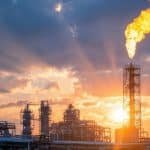
2.2. Monetization of Gas Resources: Historically, Nigeria has flared a significant portion of its associated gas during oil production. However, there has been a concerted effort to reduce gas flaring and instead monetize this valuable resource through liquefied natural gas (LNG) exports, domestic utilization, and industrial development.
2.3. International Market Opportunities: Nigeria is an exporter of LNG to international markets. The country\’s LNG projects, such as the Nigeria LNG (NLNG) Bonny facility, have helped establish Nigeria as a key player in the global LNG market.
2.4. Policy and Regulatory Reforms: The Nigerian government has implemented various policy and regulatory reforms to encourage investment in the gas sector (as seen below).
2.5. Infrastructure Development: Significant investments have been made in gas infrastructure, including pipelines, gas processing plants, and LNG facilities, to support the development of Nigeria\’s gas resources.
3.0. POLICIES, LAWS AND REGULATIONS:
3.1. THE OLD ORDER (1979 – 2008)
3.1.1. Associated Gas Reinjection Act, 1979
This Act was promulgated to compel International Oil Companies to submit a plan on their gas utilization and re-injection programme by the following year. The Act has now been repealed by Section 310 of the Petroleum Industry Act, 2021 (PIA).
3.1.2. The Associated Gas Framework Agreement, 1992
The Framework Agreement introduced a package of fiscal incentives for the utilization of natural gas, which was subsequently incorporated into the Petroleum Profit Tax Act of 2004 (PPTA).
3.1.3. National Domestic Gas Supply and Pricing Regulations, 2008
The Regulation segmented the domestic gas market into three divisions, namely; gas-to-power, gas-as-feedstock, and gas-as alternative fuel.
3.1.4. The 2008 Nigerian Gas Master Plan
The Nigerian Gas Master Plan (“Plan”) was devised as a major interventionist concept to move the gas sector from its essentially dormant status in 2006 to a market-based system with willing sellers and willing buyers, realizing the full potential of the sector for the benefit of all Nigerians. The Plan adopted the Domestic Gas Supply Obligation (DGSO), which was a key tool in activating the domestic market with a regulated price floor per sector. Under the DGSO, every gas producer was mandated to allocate a portion of their production to the DGSO before they could allocate any gas to other commercial obligations. Non-compliance would result in significant penalties. Once the gas producer has satisfied its DGSO quota, any amount of gas produced in excess of that can be sold on a willing buyer/willing seller basis. The amount each supplier must allocate is not fixed but is determined each year based on domestic demand and the number of gas suppliers. Allocation to each supplier was to be done on an equitable basis.
3.2. FAIRLY RECENT POLICIES, PROGRAMMES AND LAWS (2008 – 2018)
3.2.1. The Nigerian Gas Flare Commercialization Programme, 2016
This programme was designed to eliminate gas flaring through technically and commercially sustainable gas utilization projects developed by competent third-party investors. Successful bidders were announced in 2023 with 49 flare sites awarded to 42 companies.
3.2.2. National Gas Policy, 2017
On June 28, 2017, the Federal Executive Council (FEC) at its monthly meeting approved the National Gas Policy, 2017 (“NGP”). The NGP seeks to unlock a new policy direction and introduce an institutional and governance framework for the country, geared towards driving industrial growth through utilization strategies.
3.2.3. Gas Flare (Prevention of Control) Regulation, 2018
The Regulation provides a legal framework to support the government’s plan to reduce greenhouse gas (GHG) emissions through the flaring of gas. This Regulation has however been revoked by the Gas Flaring, Venting and Methane Emission (Prevention of Waste and Pollution) Regulations, 2023.
3.3. CURRENT GAS POLICIES, LAWS AND REGULATIONS (2020 – 2024)
3.3.1. The Nigerian Gas Transportation Network Code, 2020
The Code ensures fair and non-discriminatory access to the gas transportation infrastructure; promote gas trading; and deepens domestic gas penetration in the country.
3.3.2. The Petroleum Industry Act, 2021
The PIA seeks to provide legal, governance, regulatory and fiscal framework for the Nigerian oil & gas industry.
3.3.3. Domestic Gas Delivery Obligation Regulation, 2022
A Domestic Gas Delivery Obligation mandates gas producers to allocate a percentage of their total gas production for sale to the domestic market. The obligation is aimed at increasing the supply of natural gas to the domestic market and particularly, achieve the government’s objective of Gas to Power and encouraging the utilization of Natural Gas generally.
3.3.4. Gas Flaring, Venting and Methane Emission (Prevention of Waste and Pollution) Regulations, 2023
The Regulation seeks to:
a. reduce environmental and social impact associated with gas flaring and venting of natural gas and fugitive methane emissions into the atmosphere;
b. prevent and protect the environment;
c. prevent waste of natural resources;
d. enhance energy transition in Nigeria;
e. create a social economic benefits from gas flaring and venting;
f. set out the procedure for the Nigerian Upstream Petroleum Regulatory Commission (“Commission”) to exercise its rights to take gas at flare points in accordance with the PIA.
3.3.5. Gas Distribution Systems Regulations, 2023
The Regulation’s objective is to establish the procedure for the grant of a gas distribution license for a gas distribution system in a local distribution zone; and to provide sanctions, penalties and administrative fines for failure to comply with the provisions of the Regulation.
3.3.6. Gas Trading and Settlement Regulations, 2023
The objectives of these Regulations is to regulate the establishment and operations of gas trading and settlement exchange platforms; establish the principles for the secure, reliable and efficient trading and settlement of natural gas and other gas commodities; and to promote and sustain the efficient and robust gas trading, exchange and settlement of natural gas and other gas commodities.
3.3.7. Natural Gas Pipeline Tariff Regulations, 2023
The objectives of these Regulations is to provide a regulatory framework to determine, a sustainable gas transportation pipeline tariff regime in accordance with the PIA; and to establish a tariff methodology for the transportation and transmission of natural gas through gas transportation pipelines, and gas transportation networks.
3.3.8. Gas Pricing and Domestic Demand Regulations, 2023
These Regulations seek to regulate the process of marketable natural gas of the strategic sectors under the PIA and to identify the unregulated markets and make provisions for such market.
3.3.9. Gas for Growth Initiative 2023/Presidential CNG Initiative
The Initiative prescribes 0% import duty rate on importation of all equipment related to CNG and LPG. It also prescribes 0% Value Added Tax (VAT) on the following items:
a. Feed Gas for all processed gas;
b. Compressed Natural Gas (CNG);
c. Imported Liquified Petroleum Gas;
d. CNG equipment components, conversion and installation services;
e. LPG equipment components, conversion and installation services;
f. All equipment and infrastructure related to the expansion of CNG, LPG and the Presidential CNG Initiative, including conversion kits.
3.3.10. Nigerian Gas Domestic Base Price[1]
Just recently, the Nigerian Midstream and Downstream Petroleum Regulatory Authority (“Authority”), in line with Section 167 of the PIA and the Third and Fourth Schedule of the PIA, determined the Domestic Base Price for the year 2024 to be USD2.42/MMBTU.
The Domestic Base Price for the Power Sector is USD2.42/MMBTU while the base price for the “Commercial Sector” is USD2.92/MMBTU. With respect to Gas Based Industries, the floor domestic price is USD0.9/MMBTU with a maximum price of USD2.42/MMBTU. Gas based industries include industries or projects that process or utilize ammonia, urea, methanol, polypropylene, low sulphur diesel and others that the Authority may add by way of Regulations.
Principles that guide the determination of the Domestic Base Price
a. Pricing must be cost and market reflective.
b. Relative Benchmarking with jurisdictions similar to Nigeria.
c. Cost of Gas.
d. International pricing Benchmark.
3.3.11. The Oil & Gas Companies (Tax Incentives, Exemption, Remission, ETC) Order 2024[2]
In February 2024, the President of the Federal Republic of Nigeria, Bola Ahmed Tinubu signed the Oil & Gas Companies (Tax Incentives, Exemption, Remission, ETC) Order 2024 (“Executive Order”). The Executive Order is aimed to encourage Non-Associated Gas (NAG) greenfield projects for onshore and shallow waters.
Some of the highlights of the Executive Order include:
a. Gas Projects with first gas production date on or before 1 January 2029 to enjoy Gas Tax Credits.
b. Gas Projects with first gas production date after 1 January 2029 to enjoy Gas Tax Allowance.
c. A new category of incentive called “Gas Utilisation Investment Allowance” for new and ongoing projects.
d. Possible “Claw Back” of Gas Utilisation Investment Allowance.
4.0. CHALLENGES
The gas sector has been fraught with a number of challenges over the years. Some of the challenges include:
4.1. Implementation Timelines of Policies and Programmes: The Gas Flare Commercialization Programme was first announced in 2016 whilst announcement of successful bidders was done in 2023 – 7 years after.
4.2. Price Control for the domestic market: Given that the price of natural gas sold in the domestic market are controlled by the Federal Government, Gas producers frequently contend that the current price levels constitute an effective subsidy to consumers and are insufficient to justify their investment in gas development and production nor maintain operating equipment. Arguably, the issue of appropriate gas pricing constitutes the major hinderance to the development of the gas sector. This issue is particularly relevant in light of the fact that the main driver for domestic gas sales is the power sector which utilises over 70% of the gas produced in Nigeria. Clearly, the current gas prices and electricity tariffs are unlikely to attract the levels of investment necessary for gas utilisation.
4.3. Skewed Policies towards upstream gas production.
4.4. Unlocking Capital.
4.5. Need for more collaboration between regulators.
4.6. Security Concerns: The security situation, particularly in the Niger Delta region, poses risks to gas infrastructure, production, and operations, impacting supply reliability and investor confidence.
4.7. Data Management and Reporting
4.8. Clear communication of policies.
4.9. Compliance Costs: Industries and companies may find it expensive to comply with the new regulations, especially as it would require significant changes to infrastructure or technology upgrades.
4.10. Technological Limitations: Implementing technologies to reduce gas flaring, venting, and methane emissions might be challenging due to technological limitations or lack of readily available solutions.
4.11. Challenges with Gas Trading and Settlement Regulations, 2023
4.11.1. Complexity of Market Structure: Gas trading markets can be complex, with multiple participants, including producers, distributors, traders, and consumers. Implementing regulations that accommodate the diverse interests and dynamics of these stakeholders while ensuring fair and transparent trading practices may be challenging.
4.11.2. Market Transparency: Ensuring transparency in gas trading markets is essential for promoting competition, preventing market manipulation, and protecting consumer interests. However, achieving adequate levels of market transparency may be challenging, particularly in regions where trading activities are opaque or dominated by a few large players.
4.11.3. Cross-Border Trading: Gas trading often involves transactions across national borders, raising challenges related to regulatory harmonization, jurisdictional issues, and cross-border cooperation among regulatory authorities. Ensuring consistent regulatory frameworks and effective coordination among regulatory authorities may be challenging, particularly in regions with diverse regulatory environments.
4.11.4. Standardization of Contracts: Gas trading often involves the use of complex contracts with varying terms and conditions. Standardizing trading contracts to promote efficiency and reduce transaction costs while accommodating the diverse needs of market participants may pose challenges.
4.12. Resources Constraints & Enforcement: Ensuring compliance with the regulations might be difficult due to inadequate monitoring and enforcement mechanisms. Without proper regulatory oversight, some companies might continue to flout the regulations.
5.0 PROSPECT
5.1. Export Opportunities: Nigeria aims to leverage its abundant gas resources to increase LNG exports, tapping into growing global demand for cleaner energy sources and diversifying its export revenue streams.
5.2. Domestic Market Development: There are opportunities to expand domestic gas utilization across various sectors, including power generation, industrial applications, transportation, and household use, to drive economic growth and reduce reliance on more expensive and polluting fuels.
5.3. Investment Potential: Despite challenges, Nigeria\’s gas sector offers significant investment potential, particularly in upstream exploration and production, gas infrastructure development, and downstream gas utilization projects.
5.4. Regional Integration: Nigeria seeks to enhance regional cooperation and integration in the gas sector through initiatives such as the West African Gas Pipeline (WAGP) and the Trans-Saharan Gas Pipeline (TSGP), which could unlock new markets and investment opportunities.
6.0. CONCLUSION
In conclusion, Nigeria stands at a critical juncture in its gas sector development, facing both significant challenges and promising prospects. While the country possesses vast reserves of natural gas, unlocking its full potential requires addressing various obstacles. Security concerns, particularly in the Niger Delta region, continue to pose threats to infrastructure and investment. Additionally, inadequate infrastructure, policy inconsistencies, and regulatory bottlenecks hamper the efficient monetization and utilization of Nigeria\’s gas resources.
However, amidst these challenges, there are promising opportunities for the country. With continued policy reforms, strategic investments in infrastructure, and effective collaboration between government and industry stakeholders, Nigeria can harness its abundant gas reserves to diversify its economy, meet domestic energy needs, and capitalize on international market opportunities.
Looking ahead, Nigeria must prioritize addressing the root causes of its gas sector challenges while leveraging its strengths to realize its potential as a global gas powerhouse. This necessitates sustained efforts to enhance security in gas-producing regions, streamline regulatory frameworks, and promote private sector participation through favorable investment conditions.
Furthermore, investing in critical gas infrastructure, such as pipelines and processing facilities, will be essential for unlocking remote gas reserves and facilitating their integration into domestic and international markets.
By embracing these opportunities and surmounting existing challenges, Nigeria can position itself as a leading player in the global gas industry, driving economic growth, job creation, and sustainable development for the benefit of its citizens and the broader region.
[1] Please see the link to our previous article on this subject https://ao2law.com/impact-of-the-new-pricing-of-natural-gas-for-the-nigerian-domestic-gas-market/
[2] Please see the link to our previous articles on this subject https://ao2law.com/nigerias-presidential-order-on-gas-incentives-an-attempt-to-tend-to-the-golden-goose/
Please do not treat the foregoing as legal advice as it only represents the public commentary views of the authors. All enquiries on this Brief should please be directed at:

Oyeyemi Oke
Partner
oyeyemi.oke@ao2law.com

David Akpeji
Associate
david.akpeji@ao2law.com

Olajide Akibu
Associate
olajide.akibu@ao2law.com